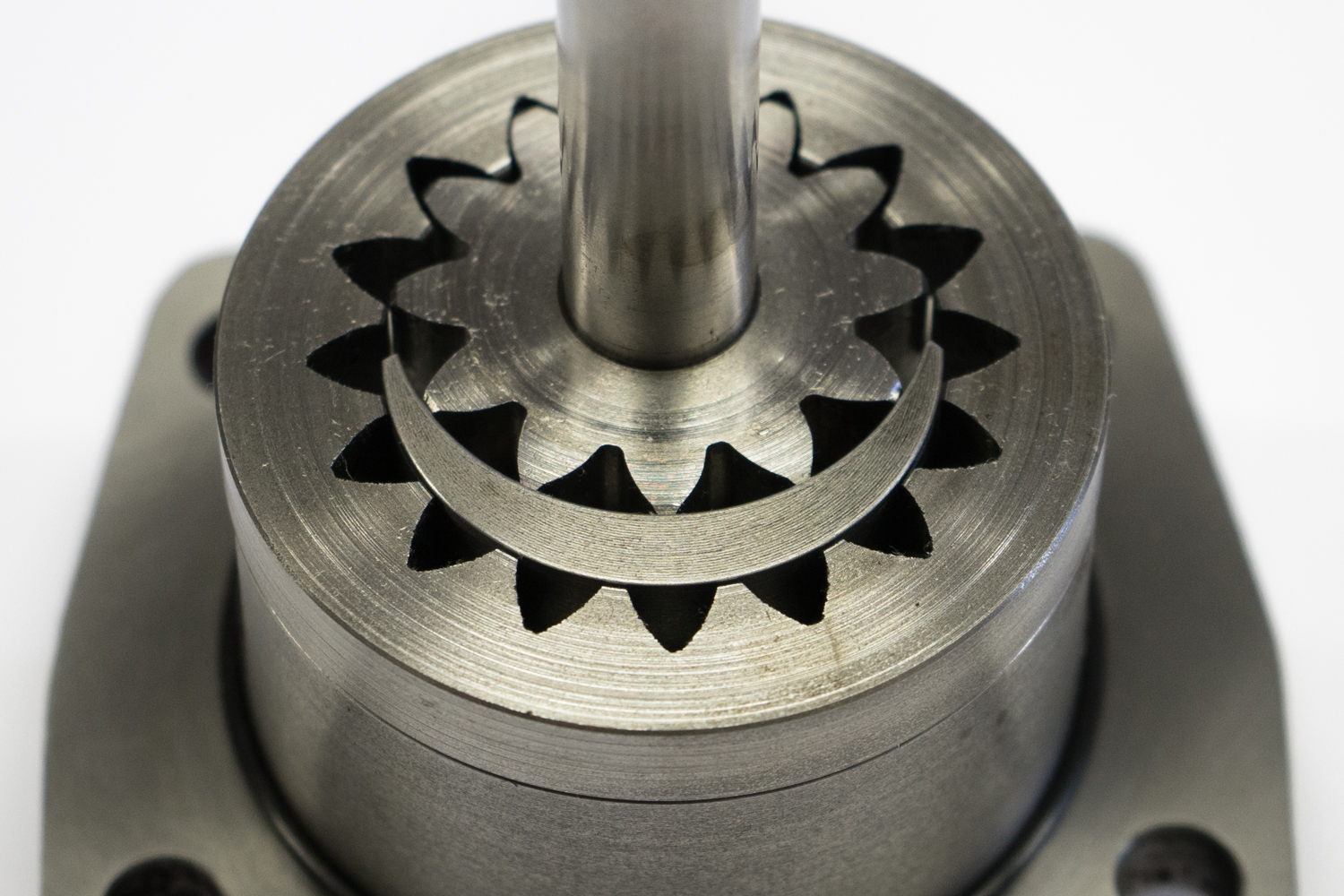
There are all sorts of applications that use gear pumps, and there are a lot of great benefits to using them. Not only are they easy to use and maintain, but they also come at a low cost, are highly effective, and aren’t affected by any changes to fluid viscosity or density. Gear pumps come in two different forms: internal and external. Each has its own set of advantages and disadvantages and specific applications, but what are the differences?
How Internal And External Gear Pumps Work
In simple terms, gear pumps are positive displacement pumps that mechanically transfer fluids from one place to another. To get more specific, let’s look at internal and external gear pumps individually and see what their differences are:
Internal Gear Pumps
Internal gear pumps consist of two gears – a sizeable outer gear that does all the hard work and a smaller idler gear that sits inside of it. Whenever the two come into contact, the pump draws in the liquid and sends it through the casing. It’s then forced out the other end as the teeth of the two gears interlock.
Internal gear pumps are incredibly versatile and able to pump all manner of fluids. Some of their most popular applications include pumping resins, chemicals and bitumen, or even the most viscous of liquids. They fall short when pumping liquids with large solids, as any large tolerances could easily cause the pump to become blocked or even damaged.
External Gear Pumps
External gear pumps work much the same as internal gear pumps, with both featuring two gears that generate flow when coming into contact. Instead of having two gears turning together in the same direction, however, external gear pumps have two gears that work against one another in the opposite direction. Liquid is drawn into the pump as the gears interlock, and the teeth carry the fluid around the pump to the outlet, where it’s forced out as they meet again.
External gear pumps can come in a few different configurations and designs, typically single, double, spur, herringbone, or helical shapes. Their most frequent application is usually in metering or sampling and to transport chemical additives, fuels, and polymers. They’re well suited to medium to low temperatures and high-pressure applications, although they should be kept clear of any solids, xany abrasive materials, and higher temperatures.
To find out more about gear pumps and which option is right for you, contact us today.